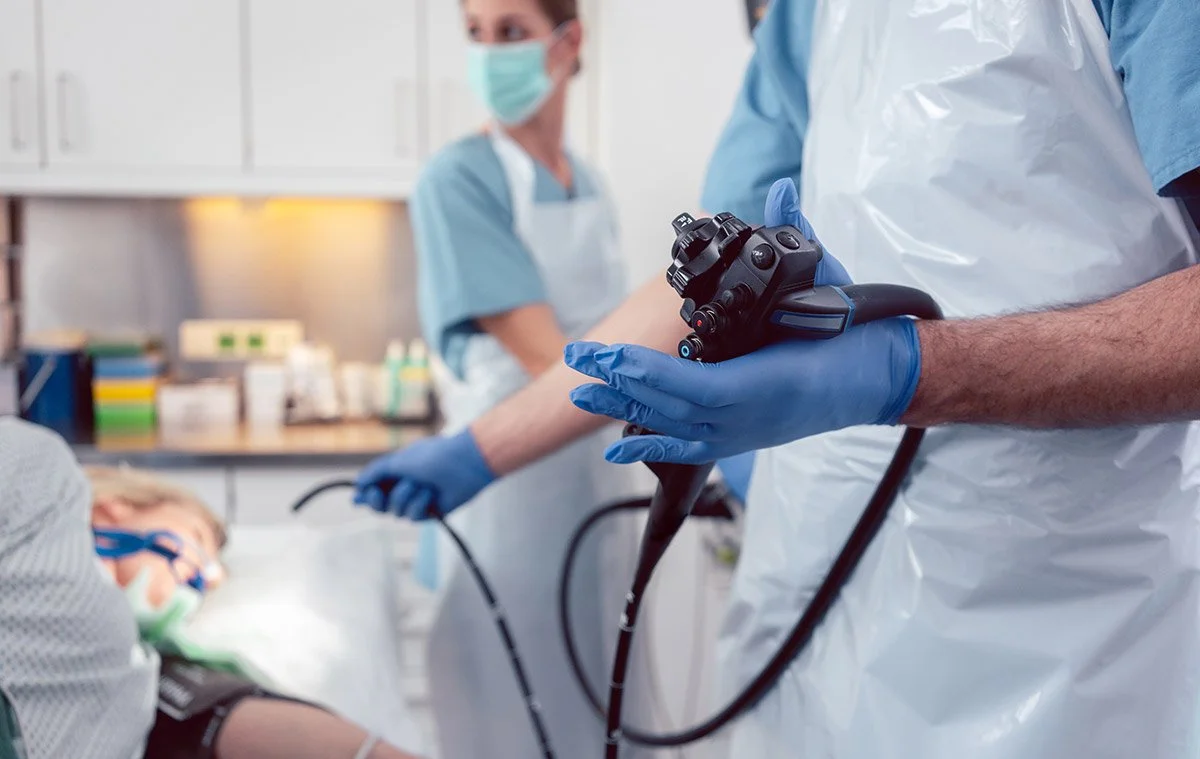
Endoscopy
-
A short camera test to examine the oesophagus, stomach and first part of the small bowel. It helps diagnose causes of symptoms such as heartburn, swallowing difficulty, anaemia or pain. Most procedures take just a few minutes with throat spray or light sedation. You’ll receive the findings in plain English and a clear plan the same day whenever possible.
-
During endoscopy we can also treat certain problems — for example, stretching (dilatation) of narrowings, controlling bleeding or placing a stent where appropriate. These treatments can avoid or delay major surgery in selected cases. I’ll talk through benefits, risks and what recovery looks like before we proceed.
-
Barrett’s is a change in the lining of the lower oesophagus caused by long-term reflux. Most people with Barrett’s never develop cancer, but regular surveillance endoscopy helps us monitor for any early changes. Where indicated, we discuss treatment options to remove or destroy abnormal cells and reduce risk. You’ll receive clear guidance on reflux control and an easy-to-follow follow-up schedule.
Note: The above is general information and not a substitute for individual medical advice. If you have red-flag symptoms such as difficulty swallowing, vomiting blood or unexplained weight loss, please seek prompt assessment via your GP or urgent services.
Endoscopy is a simple but important procedure that allows us to examine or treat problems in your upper digestive system. While the thought of having an endoscopy might feel overwhelming, my team and I prioritise your comfort throughout the entire process. We use the latest techniques and offer various sedation options to ensure the procedure is as comfortable as possible. Most patients are surprised by how quick and manageable the experience is, and you'll be supported by our experienced staff every step of the way.